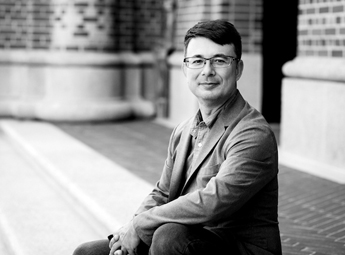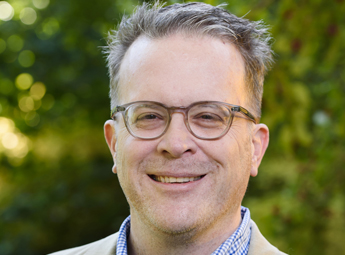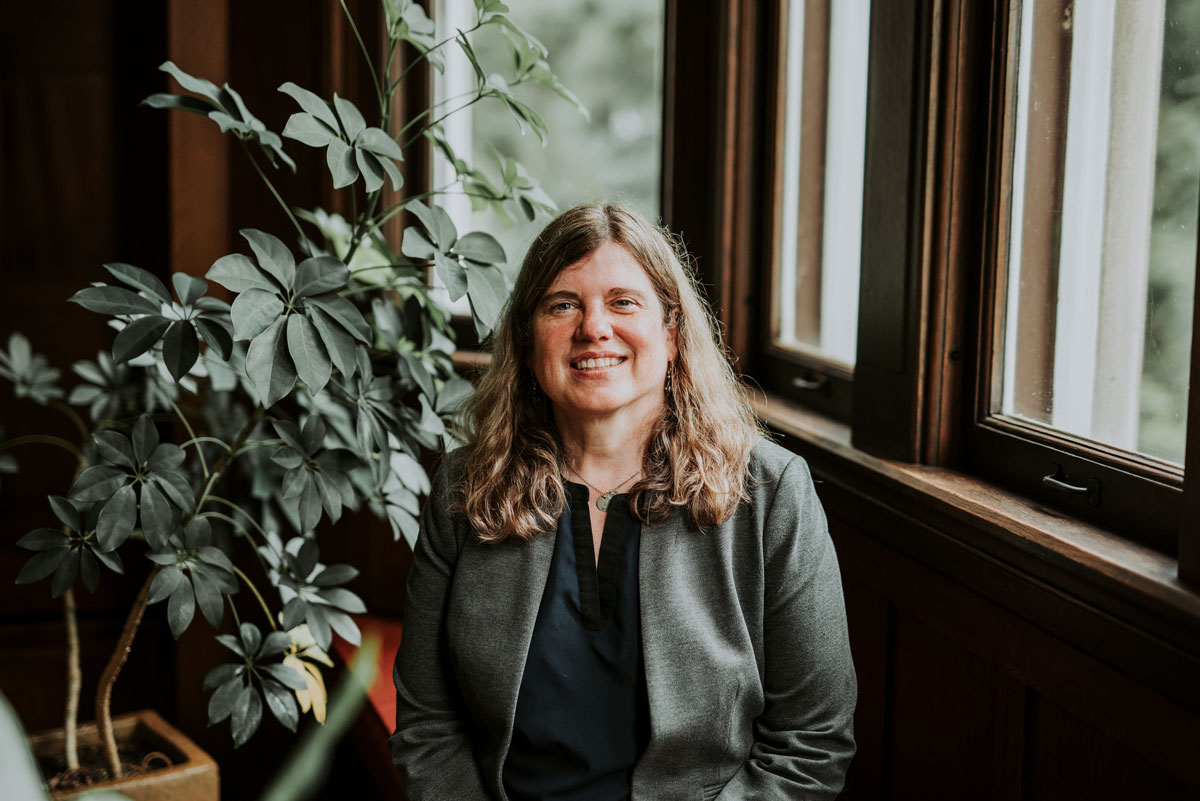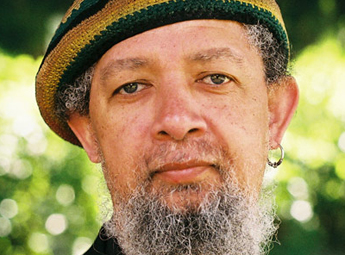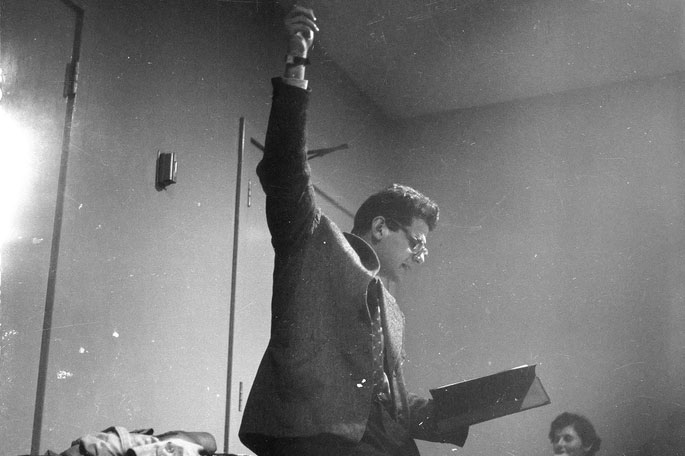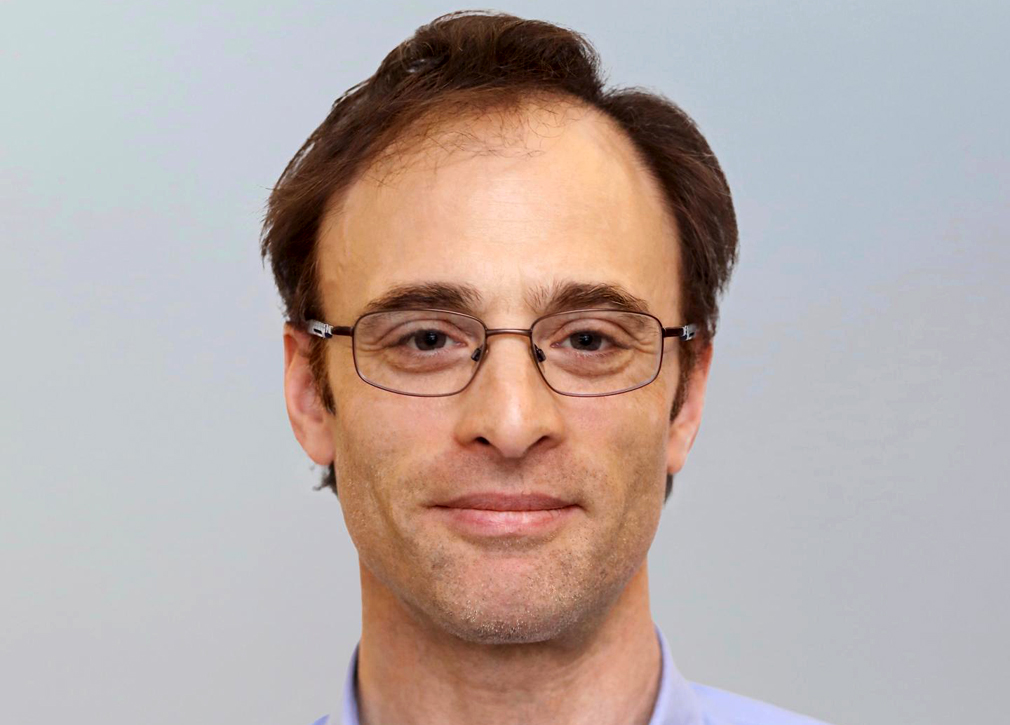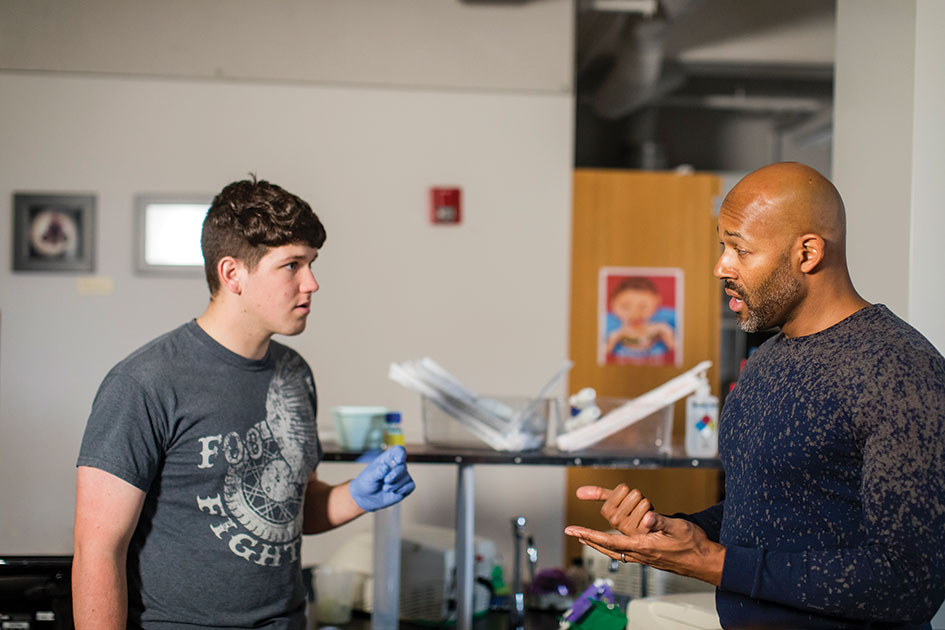
About the Vollum Award
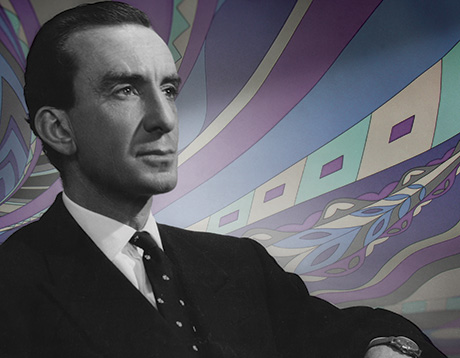
The Vollum Award was created in 1975 as a tribute to the late C.
Howard Vollum, a 1936 Reed graduate and lifelong friend of the
college. Winners are selected for the perseverance, fresh approach
to problems and solutions, and creative imagination that
characterized Vollum's career. The award winner receives $5,000 and
a silver medal encased in a walnut triptych. The Vollum Award was
endowed in 1975 by a grant from the Millicent Foundation, now a
part of the M.J. Murdock Charitable Trust.
Past recipients of the Vollum Award include Leroy Hood, Kenneth N.
Raymond, James Russell, Jaen Lubchenco, Russell J. Donelly, Edwin
G. Krebs, Adele Goldberg, Brian W. Matthews, Lynwood W. Swanson,
Jerry F. Franklin, Steve Jobs, Lewis H. Kleinholz, Michael L.
Posner, Harold K. Lonsdale, Gertrude F. Rempfer, David Powell
Shoemaker, Howard S. Mason, Bill Gates, George Streisinger, Paul
Lutus, Victor Klee, M. Lowell Edwards, Paul H. Emmett, Linus C.
Pauling, C. Norman Winningstad, Arthur F. Scott, John M. Fluke, and
Douglas C. Strain.
Reed in the Media
New York Times features Reed in an article on the increased demand for financial aid; President Diver responds to the Times article; OPB gives the Oregon perspective
New York Times features Reed College in an article on admission trends during the economic downturn
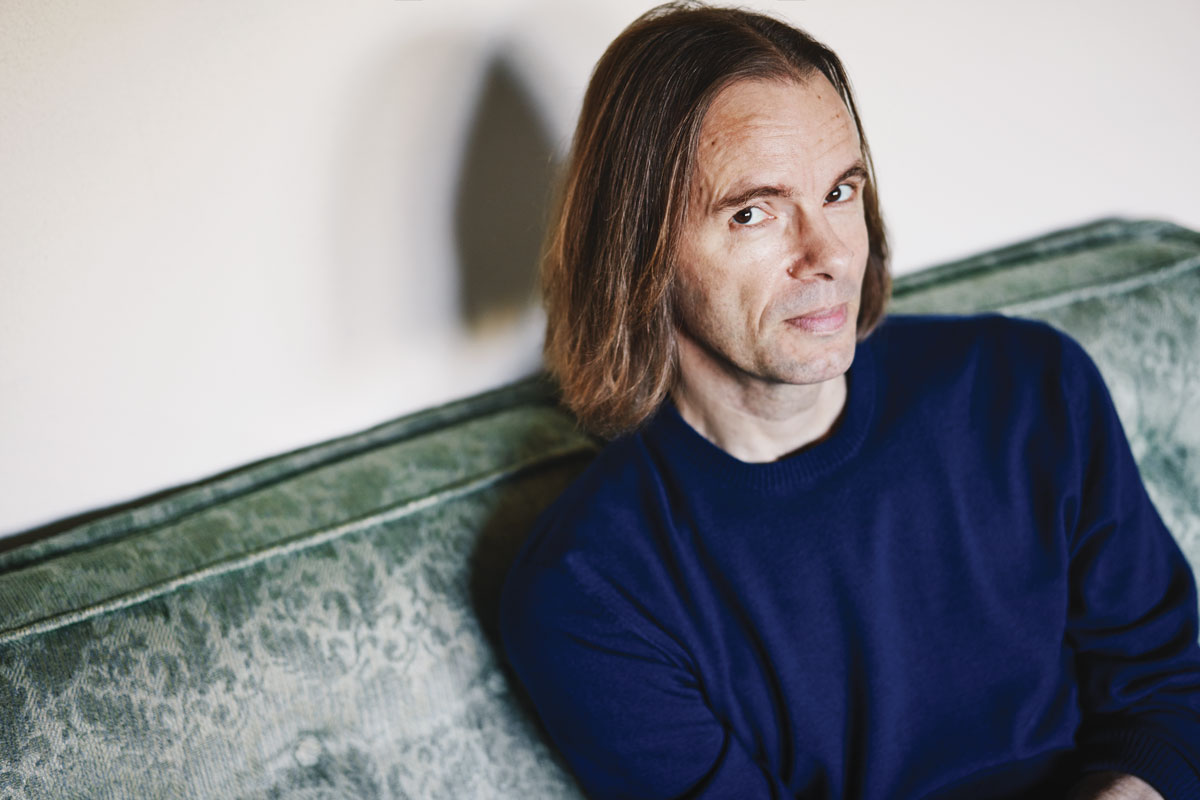
My Abandonment, the latest novel by Reed's Peter Rock, has gained local and national attention in the Oregonian, NY Post, Newsday.
Oregonian Q&A with Reed’s Crystal Williams on
her third collection of poems, Troubled Tongues
The Oregonian review of "Suddenly" at the Douglas F. Cooley Memorial Art Gallery.
Early Voting has become a hot topic on the Presidential campaign trail, and Reed’s Paul Gronke is a leading expert in the field: read Paul’s latest contribution on CNNPolitics.com.
Oregon Council for the Humanities magazine features its Humanity in Perspective course. The course is taught by Reed professors, and helps low-income adults use the humanities to improve their lives.
Boston’s WBUR topical issues show, Here and Now, features Reed professor of political science Paul Gronke on the popularity of early voting.
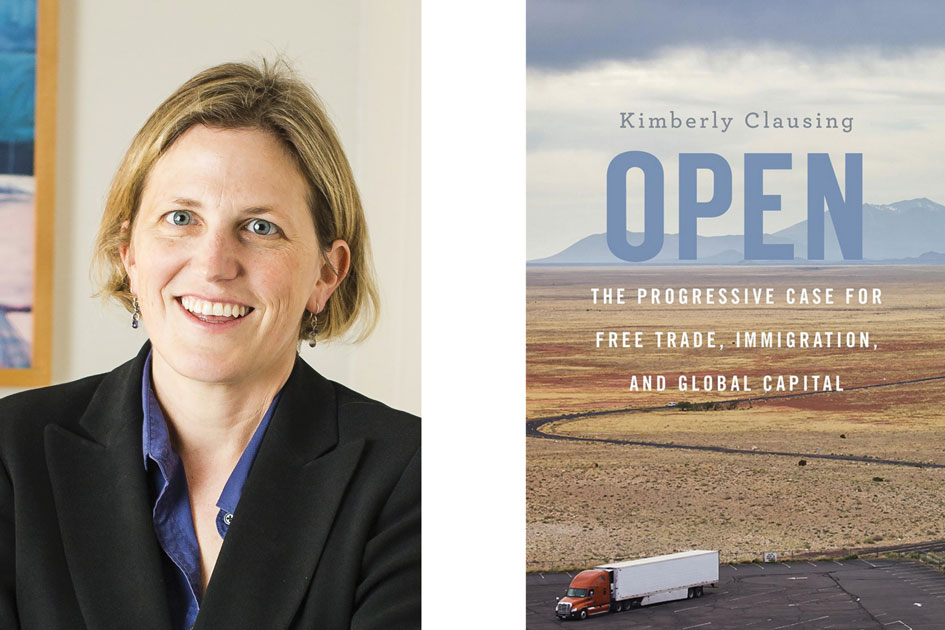
Kimberly Clausing, Reed professor of economics, on how Wall Street's meltdown will impact the folks of Main Street on Marketplace.
Paul Gronke, Reed professor of political science, on early voting in the UK's The Guardian.
Reed dean of admission Paul Marthers on OPB’s Think Out Loud to discuss the rising cost of a college education.
Paul Gronke, Reed professor of political science, is quoted in the New York Times on the influence of early voting on campaign strategy in the presidential election.
The Oregonian on the City of Portland’s decision to include the Parker House in Reed’s amended master plan.
The Oregonian profiles "suddenly: where we live now" at the Douglas F. Cooley Memorial Art Gallery.
Ellen Millender, Reed associate professor of classics, shares her thoughts on the use of technology in the classroom for a New York Times article.
Paul Gronke, Reed professor of political science, and Reed’s Early Voting Information Center are part of a USA Today story on the upcoming presidential election.
Jeffrey A. Parker, Reed professor of economics, and Paul Marthers, Reed dean of admission, examine faculty pay equity at small liberal arts colleges for Academe.
Reed Dean of the Faculty Peter Steinberger appears on OPB's Think Out Loud to discuss Reed’s drug and alcohol policy.
2008 Reed graduate Lukas Strickland is featured in the Oregonian for being a recipient of a Thomas J. Watson Fellowship travel grant.
The Oregonian reviews Jess, an exhibition at Reed's Douglas F. Cooley Memorial Art Gallery.
Marat Grinberg, Reed Russian literature professor, comments in the New York Review of Books on the "problem of evil" in postwar Europe.
Brian Kassof, Reed visiting assistant professor of history and humanities, contributes to an OPB story on the origins of May Day.
Former President Bill Clinton responds on ABC News to the questioning of Hilary Clinton's campaign strategy by Paul Gronke, Reed political science professor.
Read more media stories.
News Center
Features
Campus News
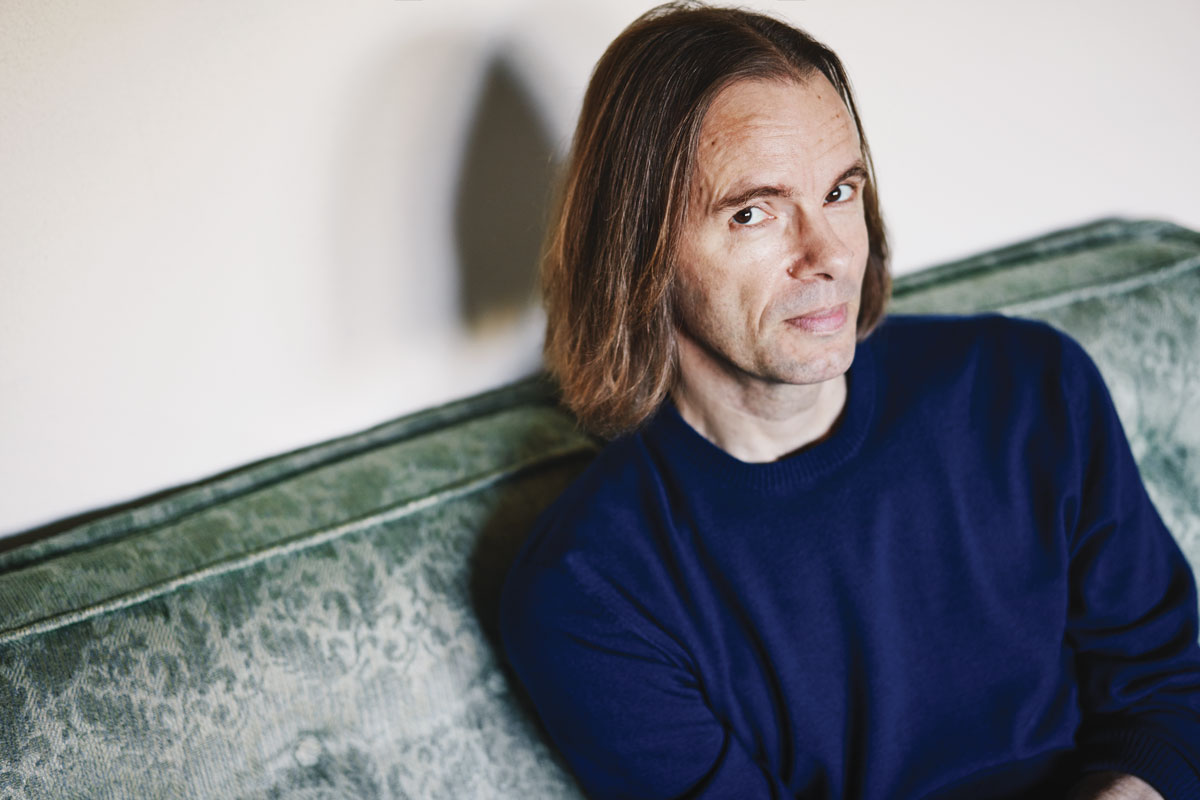
Linux creator Linus Torvalds honored with Reed College's Vollum Award
The Vollum Award for Distinguished Accomplishment in Science and Technology was presented to Torvalds at Reed's convocation ceremonies

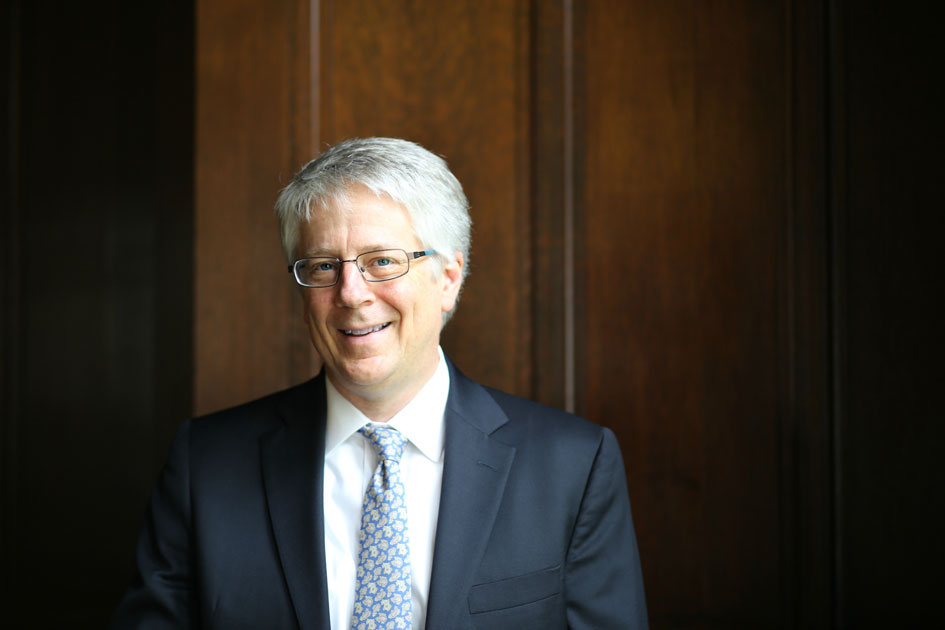
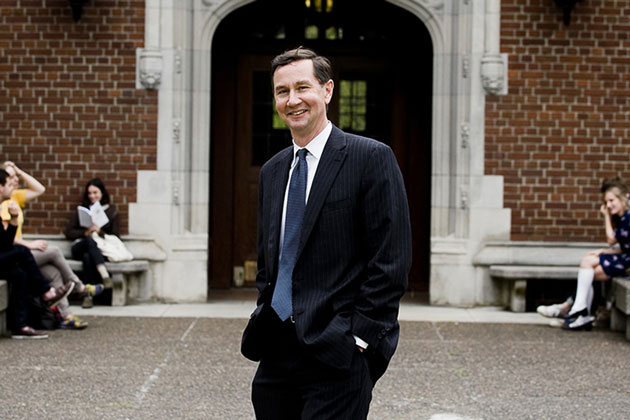
Award recipient Linus Torvalds, Dean of Faculty Peter Steinberger,
and Reed College President Colin Diver
|
|
PORTLAND, OR (August 24, 2005) - Reed College president Colin Diver
officially opened the 2005-06 academic year at Reed College with
convocation ceremonies at 4 p.m. on Wednesday, August 24, in the

Kaul Auditorium on the Reed campus.
At the ceremonies, the prestigious Vollum Award for Distinguished
Accomplishment in Science and Technology was presented to Linus
Torvalds. Torvalds, a Fellow at the Open Source Development Lab
(OSDL) in Beaverton, Oregon, is the creator of the computer
operating system Linux. OSDL is a non-profit organization, founded
in 2000, and supported by a global consortium of leading technology
companies, dedicated to accelerating the growth and adoption of
Linux.
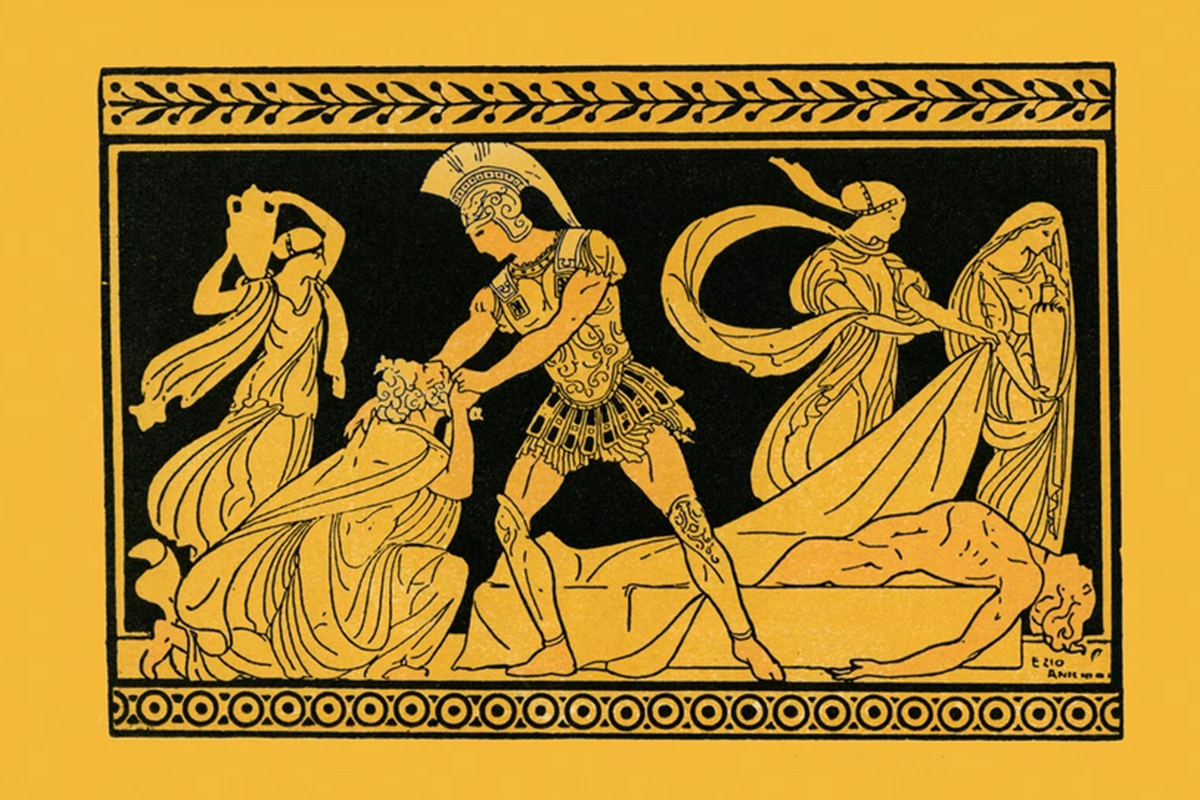
Reed's convocation ceremony also included a brief lecture on "Siren
Songs: Allegorizing
The Odyssey" by Robert Knapp, the
Richard F. Arragon Professor of English and Humanities.
Linus Torvalds
Torvalds was born in Helsinki, Finland. He earned his M.S. in
computer science from the University of Helsinki. While a student
at the University of Helsinki in 1991, he created the Linux
kernel--part of the operating system that manages memory. He sought
a reliable operating system with technological sophistication, yet
more affordable than other operating systems for mainframes and
computer workstations.
He soon offered his Linux program for free, and posted the source
code so that other programmers could experiment on their own,
making modifications at will. With input received from these
programmers, Linux became exceedingly reliable, efficient, and
accessible; it can be downloaded free from the Internet.
In 1997, Torvalds moved to the United States to work as an engineer
for Transmeta Corporation in Santa Clara, California, leaving the
company to become a Fellow at OSDL in 2003. He now works
exclusively on the development of the Linux kernel.
Torvalds was named "Person of the Year" by
PC Magazine in
1999. In 2001, he shared the first Takeda Award for Social/Economic
Well-Being with Richard Stallman and Ken Sakamura. This award was
established by Japan's Takeda Foundation to honor and encourage
contributions in science and technology. In 2004, he was recognized
by
Time magazine as one of the most influential people in
the world. He is the recipient of honorary Ph.D.s from the
University of Helsinki and Stockholm University.
With David Diamond, he co-authored an autobiography,
Just for
Fun: The Story of an Accidental Revolutionary. In the
autobiography, Torvalds urges every company to take an open-source
approach: to share information throughout management and to invite
outsiders to be part of decision-making issues. The result of this
strategy, according to Torvalds, is that companies would move from
being "predictably successful," to being "unpredictably really,
really, really successful."
###
Reed College
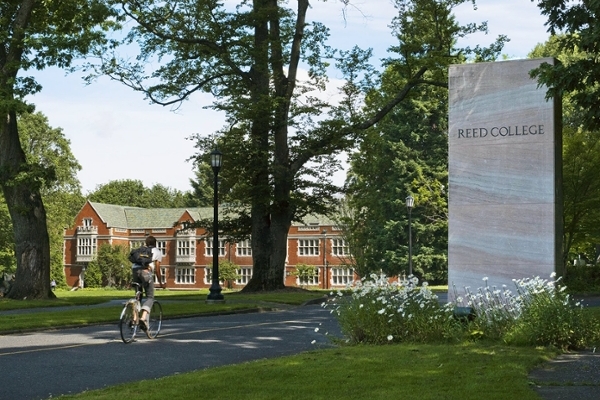
Reed College Reed College, in Portland, Oregon, is an undergraduate institution of the liberal arts and sciences dedicated to sustaining the highest intellectual standards in the country. With an enrollment of about 1,360 students, Reed ranks third in the undergraduate origins of Ph.D.s in the United States and second in the number of Rhodes Scholars from a liberal arts college (31 since 1915). For more information, visit web.reed.edu.
Back to Top